

Becoming Letters #5
Movin’ and groovin’ along the southern Australian coast

I’m writing this letter from Melbourne, the city we landed in two months ago. In these sixty days of newness and movement, it has felt a bit like a homecoming to visit the city again. After a brief loop to the west, we’ll be headed east and north for quite a few months, moving up the coast. Much has happened this month, here’s a bit about it!
What I’ve been up to
This past month has been spent wandering around Southern Victoria. I put a lot of care into a recent blog post I shared, called Learning to Become Kin. In it, I recounted four areas I’ve recently had the privilege to visit: Lake Bolac, Budj Bim, the Gariwerds, and Hepburn. I’ve been reading a book called Becoming Kin: An Indigenous Call to Unforgetting the Past and Reimagining Our Future by Patty Krawec, and Patty’s wisdom about indigenous history and values has helped shape the ways I am experiencing the land and people here. Check out my new post if you want to learn more!
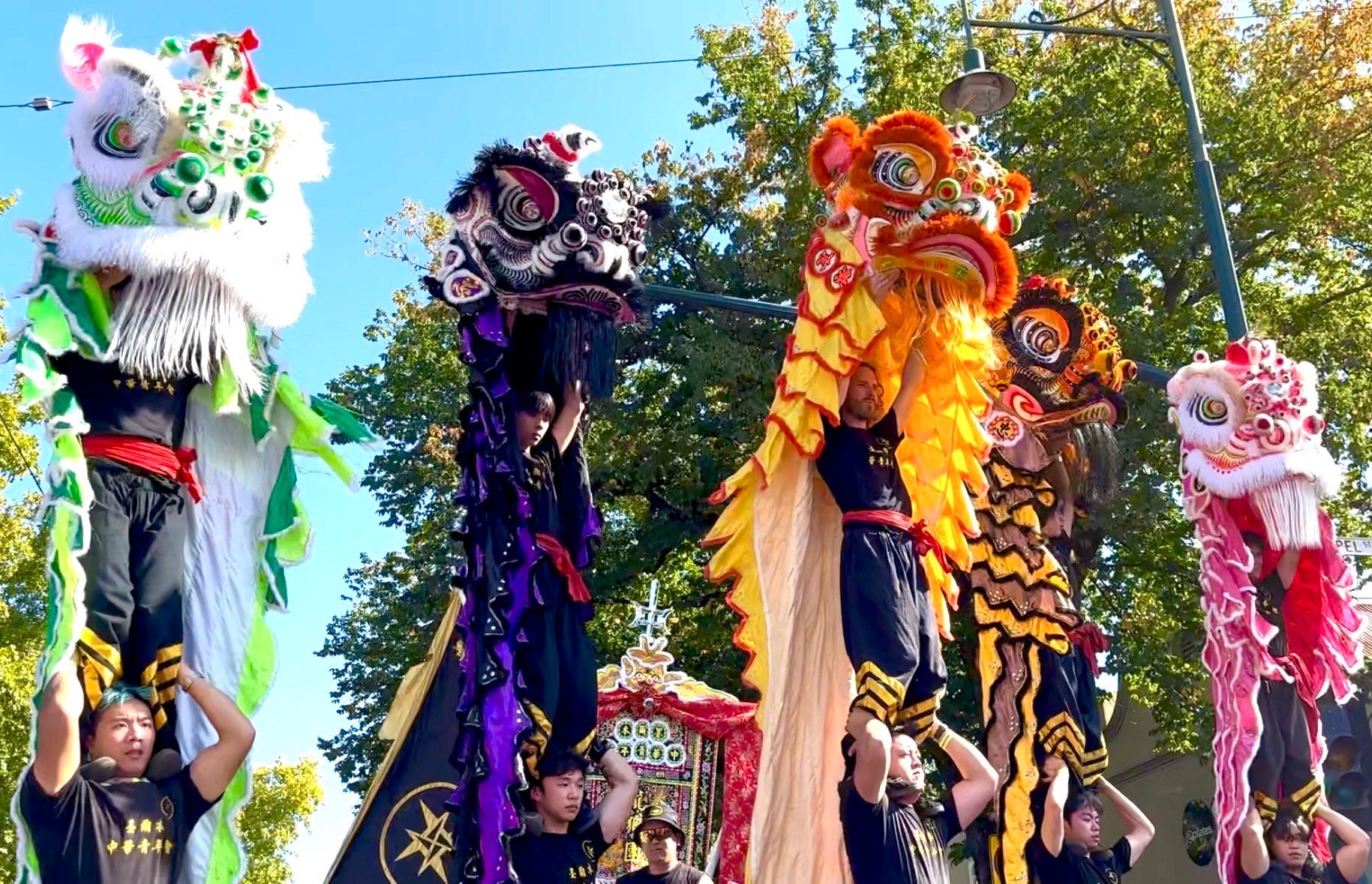
Around Easter, we found ourselves in Bendigo, a larger town with an interesting history. It just so happened that Easter time is their biggest festival of the year—and it involved the world’s longest Imperial Dragon AND the world’s oldest Imperial Dragon!!
Bendigo’s Chinese community has deep roots here, stretching back to the gold rush of the 1850s, when tens of thousands of Chinese migrants made the long journey to the Victorian goldfields in search of fortune. Though they faced significant discrimination (including restrictive poll taxes and, later, the White Australia Policy), many stayed, and their descendants kept their culture and traditions alive. The Easter Festival, which began in 1871, became the heartbeat of that endurance, and the famous dragon parade has been a centerpiece ever since. You can see more photos from this festival here, at my newest Snapshots post!
Most recently, we returned to Melbourne to bring our car, Connie Baby, to the doctor, where she got a headlight and some sensors replaced. We’re back on the road and better than ever, heading east this time! I’m not sure how much camping we’ll be doing while we’re in the south, as it’s getting colder each and every day as fall slips in and we head towards wintertime. We’re beginning to travel north up the east coast, which is a common route folks do to chase the sun here in Australia. With any luck, we should be around Sydney by the next Becoming Letter! It’s about a 1,500km/1,000mi drive. Let’s hope fuel prices go down… currently, fuel prices have soared to $2.20-2.40 AUD per liter, which equates to $5.87-$6.41 USD per gallon. And in a 2006 Honda CRV… Let’s manifest lower prices!!
Lunar Cycle
This upcoming cycle carries a name I brought with me from the Northern Hemisphere: the Flower Moon, named by Algonquin peoples of New England and the Great Lakes for the explosion of wildflowers blooming across North America in May. I am carrying these names like tiny lanterns, borrowed from peoples and places I know better than the land I’m standing on now.
The thing is, there are no flowers blooming here. Autumn is deepening across Victoria. The mornings are cooler, the light softer, and there are more rainy days than not. The Flower Moon rises over a landscape moving in the opposite direction—not toward blooming, but towards a slowing down.
This is the disorientation I keep sitting with: that the names I use to mark time belong to the Northern Hemisphere, to North American land and North American seasons. They are a form of knowledge rooted in place, and I am in a very different place now.
Aboriginal seasonal knowledge works the same way, but more so. Where Western calendars divide the year into rigid structural blocks, Aboriginal calendars are based on ecological time, strongly embedded in place—in the flowering of a specific plant, the arrival of a particular bird, the angle of the stars. The moon in the Dja Dja Wurrung language is called Yern, and there is a Dreaming story about why it lights up the night sky, passed down through generations. Because of colonization, because of the West’s insistence on devaluing oral traditions, because of many years of silencing and destroying records that had survived for thousands of years… there is very little for me to find online. I learned about Yern through a children’s book by Aunty Ros Kneebone-Dodson called Mooie’s Stories that I saw in a gift shop in the Gariwerds.
There is something tender about this moment, in the borrowed names for the moon I’ve gazed upon for thirty years, for the moon I have tattooed on my arm and look at daily. I am learning so much about her, and slowly realizing that time itself looks different depending on whose land you’re standing on. And that paying attention to where you are—really paying attention, the way the Elders teach—is its own form of becoming.
A parting question for you…
What’s something you are learning right now? How do you anticipate it shaping your future?
I am learning how to deepen my relationship to place through the art of flower essences, and it is filling my heart with so much joy. I may craft a Flower Moon essence as it’s my favorite Full Moon here in the north. 🩷🌷