

Becoming Letters #7
Slowing down for a cycle with karma yoga, communal dishes, and becoming more grounded

I’m writing this post from Kenthurst, the traditional lands of the Darug people, specifically the Bidjigal and Cattai mobs. Today is a day of leaving—leaving the home I’ve built up over this past lunar cycle. Today I leave Swami’s Yoga Retreat. To talk about the leaving, we must first talk about the arrival and the becoming.
What I’ve been up to
One month ago, the flower moon cycle began for me in Sydney, in a week of city noise and crowds, before heading to the hills of Kenthurst. The highlight of that week was a visit to the Royal Botanic Garden Sydney, where I joined an Aboriginal Bush Tucker Tour led by an Aboriginal man named Yarram. I wrote about it in depth over in What the Garden Holds—worth a read if you want to sit inside that afternoon with me.
The noise quickly slinked away in an hour’s drive outside of the city, where I found Swami’s.
Swami’s Yoga Retreat is a living legacy. It was founded by Swami Sarasvati, who brought yoga from India to Australia decades ago, and is now tended by her son Sanjay and kept alive in no small part by the rotating cast of karmic yogis. I profess to not knowing what this meant before I joined. What I learned, is that Swami’s runs on Seva Yoga, the Sanskrit word meaning “selfless service” or acting for the greater good without expecting anything in return. It is the living expression of Karma Yoga, which leads you to perform duties with awareness, detachment, and love, rather than attachment to the results, e.g. work is not a burden, but a spiritual meditation. Put good in, get good out.
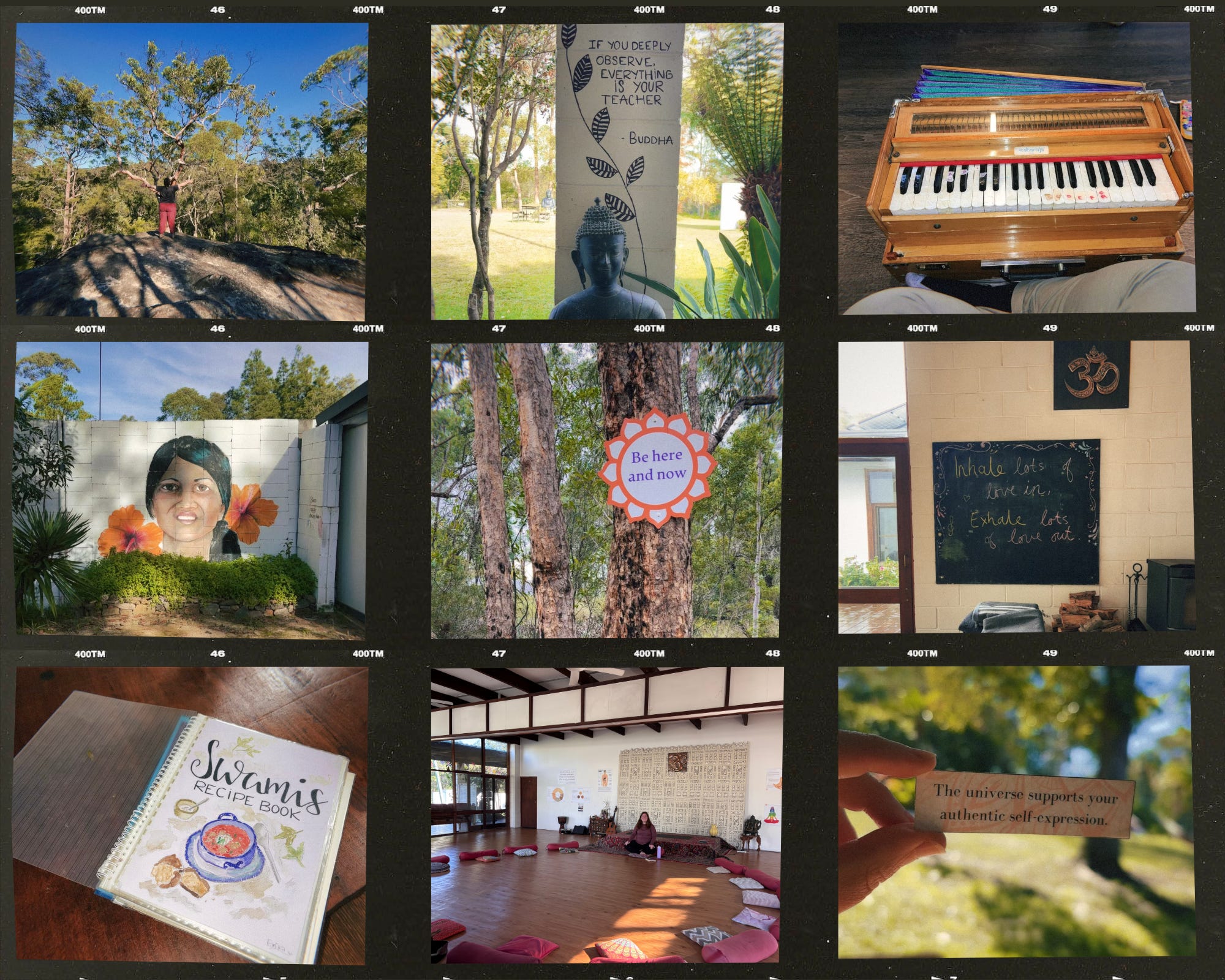
In play, this means that Swami’s is operated by volunteers who work in exchange for accommodation, meals, and immersion in the practice. I was one of ten or so volunteers during my time there, and together we ran the whole thing: the kitchen, the grounds, the guest experience, the endless dishes.
Let me tell you: there is something quietly radical about ten people from around the world singing along to 80s pop while scrubbing pots after a communal meal. About learning someone’s whole personality through the way they chop vegetables. About spending time in the reading room (my favorite place on the property), where I could slip away from the hum of the collective and just breathe, book in hand, the afternoon sun dipping softly around me. I read more this month than I have in a long time. As a non-meditator, I meditated nearly every evening. I ate simple, nourishing vegan food and felt my body remember what it’s like to be taken care of.
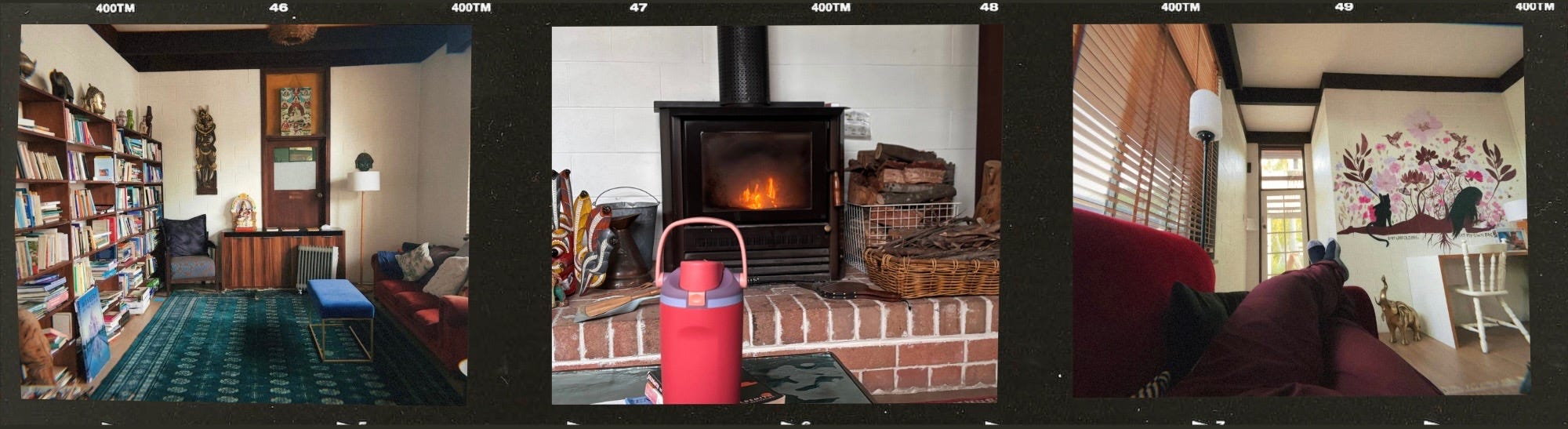
I was part of something larger than myself again. And I hadn’t realized how much I’d been missing that.
Three weeks of seva, the selfless service, is so much more than doing dishes and bringing guests extra blankets. It’s being present when presence is what’s needed. Swami’s gave me the conditions to practice selfless service and I get to carry it forward now.
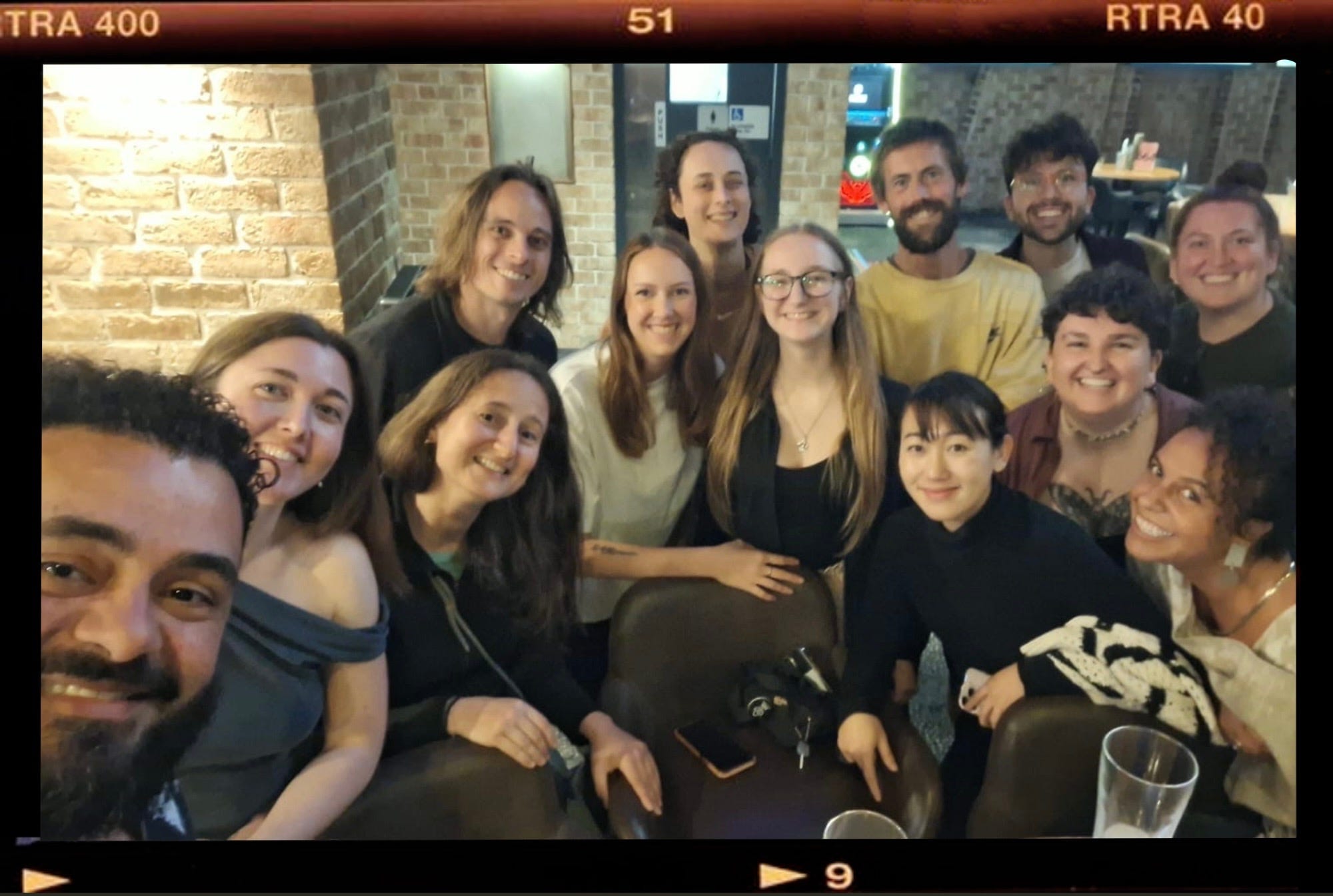
The bittersweet part is that the little family we built there is already dissolving, volunteers coming and going as they’ve always done. There is something profoundly beautiful knowing that the particular constellation of people that made this month what it was won’t exist again. That’s the nature of intentional community: it’s real and it’s temporary and both of those things are entirely true at once.
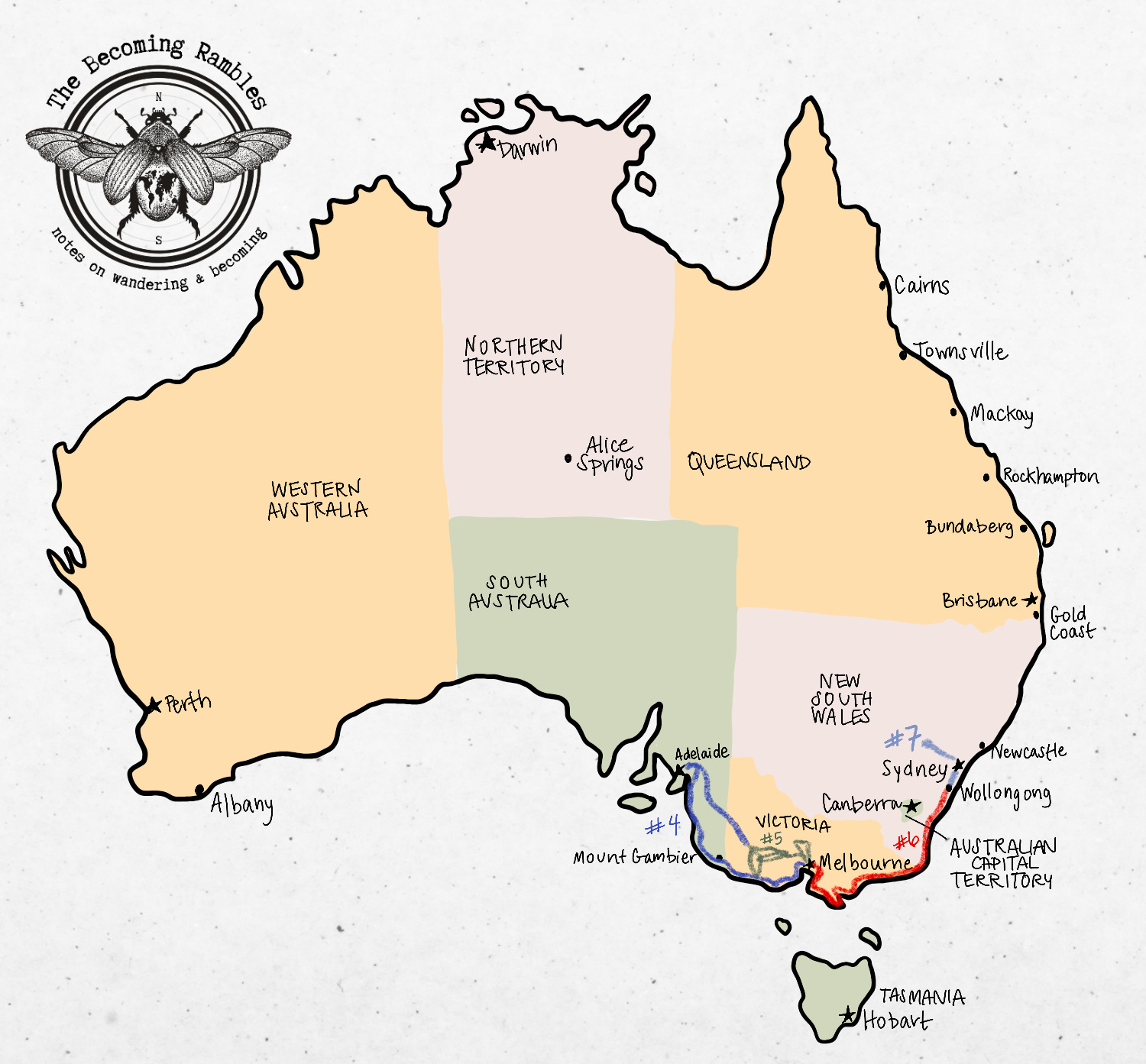
I’m heading now to Forster, on the Mid North Coast, for six weeks of housesitting. Catch me in a canal house with a tiny elderly dog, and the precise quiet of a borrowed life on loan. A very different kind of settling.
Lunar Cycle
I spent a full lunar cycle at Swami’s. I arrived just before the new Flower Moon and I’m leaving as it ends, ushering in the Strawberry Moon, named by northeastern Indigenous peoples for the brief, sweet season of wild strawberry ripening that arrives now in the northern summer. The strawberry isn’t ripe yet. This new moon is just the beginning of that cycle, a seed of sweetness not yet tasted.
In the yogic and Hindu tradition that underlies so much of what I’ve been living this month, the new moon is called Amavasya. It is considered the most inward of all lunar days, a time when prana (life force) is said to move downward and within. Many practitioners fast on Amavasya, or soften their practice, or turn toward their ancestors. It is not a day for launching or beginning; it is a day for stillness, for releasing, for honoring what has passed through you.
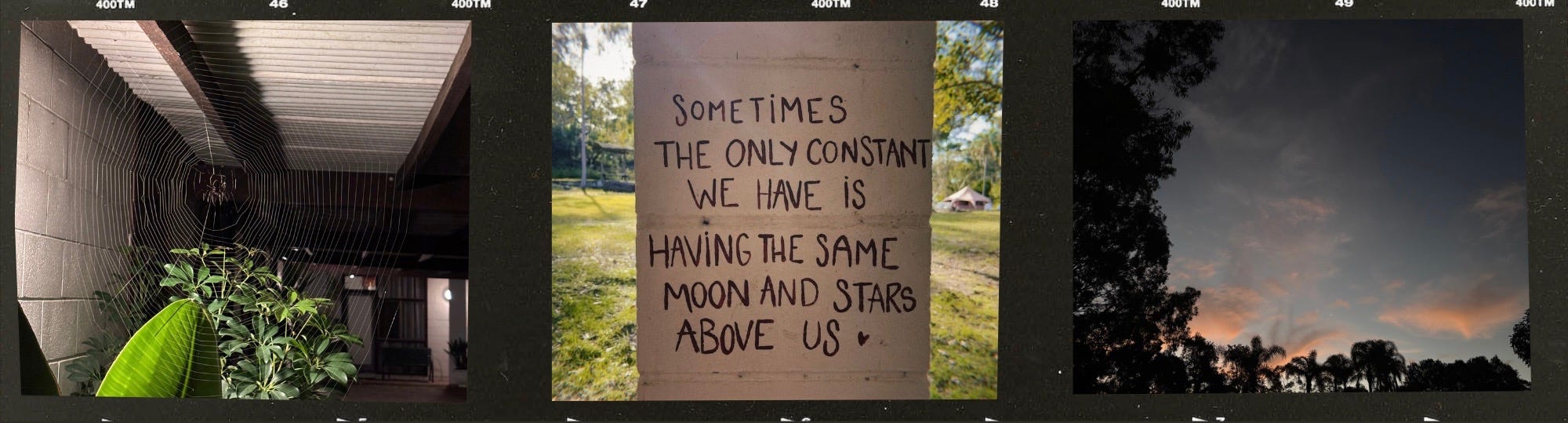
I find it quietly perfect that I’m leaving a yoga retreat on Amavasya. The tradition I’ve been living inside is asking me, on this very day, to go still. To let the container open without rushing to fill it with something new.
The strawberry moon cycle is just beginning. Whatever ripens in it… I don’t know yet. Six weeks in a borrowed house on a canal, a small dog at my feet, the delightful quality of winter light on water. Something will ripen. I’ve just got to cultivate it.
A parting question for you…
When the structure falls away—the routine, the community, the container that gave your days their shape—where does the sense of purpose go? And how do you tend it while you wait for the next one to form?
what a beautiful experience. feeling and living into the unraveling of daily structure and routine in a different way as I recently returned from a brief trip to northern Michigan to arrive home and pack up my whole life and prepare to move into our new home in a couple days. endings & beginnings. unravelings & new threads. taking it day by day and finding moments to visit the garden when I can.
Beautiful, Bre. Something devastatingly beautiful about these temporal experiences that leave their mark forever.